An automated estimate, a CMA, a certified appraisal and a cash purchase offer are four different numbers that answer four different questions. An automated estimate is a statistical guess made by software that never saw the house. A CMA is a licensed agent's opinion of the likely sale price. A certified appraisal is an independent opinion of value by a state-licensed appraiser, the only one of the four that a lender or a court relies on. A cash purchase offer is the only one that is a price someone will actually pay, on written terms.
They rarely agree on the same house, and they are not supposed to. This guide explains who makes each one, what it can and cannot see, what it is used for, and how to tell which one the job in front of you needs. Every other article in the estimates, CMAs and appraisals hub goes deeper on one piece of it.
The four numbers side by side
Automated estimateCMACertified appraisalCash purchase offer
Who produces it
An algorithm on a website
A licensed real estate agent
A state-licensed or certified appraiser
A buyer who intends to purchase
Sees the house?
No
Sometimes
Yes
Yes, on a walkthrough
What it is
A statistical estimate
An opinion of likely sale price from comparable sales
An independent opinion of value under appraisal standards
A price someone will pay, on stated terms
Used for
A starting point
Pricing a listing
Lenders, courts, estates, divorce, tax
Selling now, as-is
Is it an offer to buy?
No
No
No
Yes, subject to title and a purchase agreement
The last row is the one most sellers miss. Three of these numbers describe the house. Only one of them comes with a buyer attached.
What is an automated estimate, and why does it miss?
An automated estimate is produced by software from public records, past sales and listing data. Nobody walks through the house. Zillow's own Zestimate page states that a Zestimate is not an appraisal, and it is the clearest example of the type.
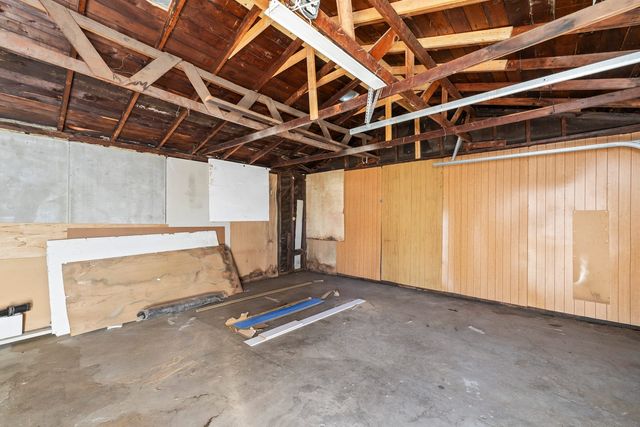
The model's blind spot is anything that is not in the records. It assumes the house has the systems and finishes of the houses it is compared with. In Pomona that gap can be wide: a restored Victorian in the Lincoln Park Historic District, an unrestored one two streets away and a post-war tract house south of Holt Avenue with a converted garage are three different markets, and an algorithm averaging nearby sales blends them. The same thing happens on a Claremont Village bungalow with original knob-and-tube wiring that the records list with the same bedroom count as its renovated neighbor.
Use an automated estimate to get a rough sense of the range. Do not price a sale, settle an estate or split an asset from it. The guide to which home value you need for which job walks through where it is enough and where it is not.
What is a CMA, and why is it not an appraisal?
A comparative market analysis, or CMA, is a licensed real estate agent's opinion of the price a house is likely to sell for if it is listed. It is built from recent sales of similar houses nearby, adjusted for differences, plus what is pending and what is on the market now. Agents use it to set a list price.
California law draws the line clearly. Business and Professions Code section 11302 defines an appraisal as developing an opinion of value for real property, then says the term does not include an opinion given by a real estate licensee in the ordinary course of business, and that such an opinion shall not be referred to as an appraisal. That is why the open-market read on this site is always called a preliminary estimate, not an appraisal. It is built the way a careful CMA is built, from comparable sales on the seller's own blocks, but it is not an appraisal and never claims to be.
A CMA is only as good as its comps and its view of condition. What a comparative market analysis includes lists every section of one and what to check in each.
What is a certified appraisal, and who needs one?
A certified appraisal is an independent opinion of value prepared by an appraiser licensed or certified by the California Bureau of Real Estate Appraisers, under professional appraisal standards. The appraiser inspects the property, selects comparable sales, adjusts them and writes a report that a third party can rely on. Anyone can look up an appraiser's license on the Bureau's public search.
The appraisal is the number institutions use:
- Lenders. A buyer's lender orders its own appraisal before funding a loan. For loans sold to Fannie Mae, its Selling Guide requires at least three closed comparable sales in the appraisal's sales comparison approach.
- Probate courts. In a California probate, the probate referee appraises the estate's property (Probate Code section 8902), and a private sale that needs court confirmation must be at least 90 percent of an appraisal made within one year before the hearing (section 10309).
- Divorce, trusts and taxes. When a value has to stand up to the other side, a court or a tax return, a certified appraisal is what the attorneys and tax professionals usually ask for.
Mr. Cali Offers never performs or offers appraisals. When a seller needs one, the referral goes to Mr. Cali Appraisals, a separate appraisal practice that shares the Mr. Cali name, whose own appraisal vs. estimate explainer covers the appraisal side in depth.
What is a cash purchase offer?
A cash purchase offer is a price a buyer will pay for the house as it sits, on stated terms: the closing date, who pays which costs, whether there is an inspection period, and what happens to anything left inside. It is not an opinion of value. It is a decision by someone with money at stake.
A written offer should start from comparable sales, then subtract each cost the buyer takes on as its own line: repairs found on the walkthrough, clean-out, holding costs, resale costs and the buyer's margin. Cash offers come from independent buyers and investors who buy for their own account, so a cash offer is generally below what the open market would bring. What the seller trades for is not preparing the house and not depending on a financed buyer's appraisal and loan. Reading a cash offer line by line shows how to check each deduction.
Why do the four numbers come out different on the same house?
Because each one answers a different question:
- The automated estimate asks what houses like this one, on paper, have sold for.
- The CMA asks what this house is likely to sell for if it is prepared and listed.
- The certified appraisal asks what the house is worth under a defined standard of value, as of a specific date, for a specific user.
- The cash purchase offer asks what one buyer will pay today for the house as it is, after carrying the repairs and the risk.
Local rules widen the gaps. A San Dimas lot inside the private horse overlay zone should be compared with other equestrian parcels; an estimate built from tract sales nearby will not see the barn or the zoning. In Rancho Cucamonga, two houses of the same size can carry different annual costs if one sits in a community facilities district, and buyers price that in. In Pomona, a city documentary transfer tax is added to the county's, which changes the seller's net but not any of the four headline numbers. What your house will sell for vs. what it is worth explains why the price and the net are different things too.
When does listing net more than a cash offer?
Often. Listing usually nets more when the house shows reasonably well, the seller has time for the market to work, and nothing on the property stops a financed buyer's appraisal: no unpermitted living area, no condition a lender will flag. In that case the open-market read will usually show a higher net than the cash column after commissions and preparation are counted, and the written recommendation says to list. When we tell a seller to list instead describes those cases, and the seller is introduced to a designated local expert, an independently licensed agent who works that neighborhood.
Cash fits better when the house needs work a financed buyer's lender will not accept, when it is full of contents, when a court or trustee needs a number that holds, or when the timeline matters more than the last dollar. A converted garage that shortens a lender's appraisal is one of the most common reasons; the converted garage article shows how that plays out.
What this looks like in practice
These are the kinds of files that come in, described without names or figures.
- A Pomona heir holding a printout of an automated estimate for a historic-district house with original systems, asking whether to restore it. The two numbers show the restored-sale path and the as-is path side by side; the estimate could show neither.
- A probate administrator who needs to know whether a cash offer clears the referee's appraisal floor before the attorney sets a hearing. The court confirmation and overbid article covers that step.
- A San Dimas owner on a horse-zoned lot whose online estimate came from tract sales. The open-market read starts again from equestrian parcels.
Getting two of the four numbers on your house
The home value page sets the four side by side and asks for the address. Mr. Cali Offers then does one in-person walkthrough and puts two written numbers on the same house: an as-is cash offer and an open-market read, each with the comparable sales, the line-item deductions and the net. The open-market read is a preliminary estimate, not an appraisal. There is no cost and no obligation to get the two numbers and the written report. Questions first? Call (909) 498-3977. City-specific notes are on the Pomona, Claremont, San Dimas and Rancho Cucamonga pages.
Sources
- California Business and Professions Code section 11302 (definition of appraisal; real estate licensee opinions excluded): leginfo.legislature.ca.gov (accessed October 31, 2026)
- California Bureau of Real Estate Appraisers, licensee search: brea.ca.gov (accessed October 31, 2026)
- California Probate Code section 8902 (probate referee appraises estate property): leginfo.legislature.ca.gov (accessed October 31, 2026)
- California Probate Code section 10309 (appraisal within one year; 90 percent condition for confirmation): leginfo.legislature.ca.gov (accessed October 31, 2026)
- Fannie Mae Selling Guide B4-1.3-08, Comparable Sales: selling-guide.fanniemae.com (accessed October 31, 2026)
- Zillow, What is a Zestimate: zillow.com (accessed September 26, 2026)
- Los Angeles County Registrar-Recorder, Documentary Transfer Tax general information: lavote.gov (accessed September 26, 2026)
- City of San Dimas Municipal Code Chapter 18.112, P-H Private Horse Overlay Zone: ecode360.com (accessed September 26, 2026)
- California Civil Code section 1102.6b (special tax disclosure): leginfo.legislature.ca.gov (accessed September 26, 2026)
Mr. Cali Offers does not perform appraisals; certified appraisals are referred to Mr. Cali Appraisals, a separate business. Cash offers come from independent buyers and investors who buy for their own account and may resell for profit; a cash offer is generally below what the open market would bring. Any value shown is a preliminary estimate, not an appraisal. Nothing here is legal, tax or financial advice.
Frequently asked questions
Is an automated home value estimate the same as an appraisal?
No. An automated estimate is a statistical figure produced by software from public records and past sales, without anyone seeing the house. A certified appraisal is an independent opinion of value by a state-licensed appraiser who inspects the property and writes a report a lender or court can rely on.
Can a real estate agent's CMA be called an appraisal in California?
No. California Business and Professions Code section 11302 says an opinion of value given by a real estate licensee in the ordinary course of business is not an appraisal and shall not be referred to as one. A CMA is an agent's opinion of the likely sale price, used to set a list price.
Is a cash offer the same as what my house is worth?
No. A cash purchase offer is a price one buyer will pay for the house as it is, on stated terms, after the buyer carries repairs, holding costs, resale costs and its margin. It is generally below what the open market would bring. It is the only one of the four numbers that comes with a buyer.
Does Mr. Cali Offers do appraisals?
No. Mr. Cali Offers puts two numbers on a house, an as-is cash offer and an open-market read that is a preliminary estimate, not an appraisal. When a lender, court or tax matter needs a certified appraisal, the seller is referred to Mr. Cali Appraisals, a separate appraisal practice.
Written by
Anthony Grynchal
Anthony Grynchal is a California real estate salesperson with eXp Realty, licensed since November 2009 (CA DRE #01873626), and the owner of Mr. Cali Offers.
More about AnthonyPublished