Comps are chosen by asking one question: which recent sales would a buyer of this house have weighed as real alternatives? Who does the choosing changes the answer. Software behind an automated estimate matches records and never sees the house. An agent building a CMA adds pending and active listings to set a list price. An appraiser follows lender rules: at least three closed sales, similar physical and legal features, the same market area where possible, each one's distance in miles, and a written reason for any comp outside those norms. A cash buyer picks the sales it expects to resell against, then deducts its costs.
So the same house can be valued from four different sets of comps on the same day, and each set is honest about the question it answers. This article sets the four side by side and gives you the questions that test any of them. It belongs to the estimates, CMAs and appraisals hub.
How is home value determined from comparable sales?
For an ordinary house, value is read from what similar houses nearby actually sold for, with each difference accounted for. That is the sales comparison method, and every one of the four numbers in the guide to automated estimates, CMAs, appraisals and cash offers leans on it in some form. The method has two steps: choose the comps, then adjust them. This article is about the first step, because a perfect adjustment on the wrong comp still gives the wrong number. The second step has its own page: how condition changes a comp.
The four choosers, side by side
Who choosesThe question the comps answerSees the house?Must explain each comp?
Automated estimate (software)
What do records and recent sales suggest, statistically?
No
No
Agent's CMA
What should this house list for to sell?
Sometimes
Only if you ask
Certified appraisal (licensed appraiser)
What is the market value, under the rules the client relies on?
Yes, for a full appraisal
Distance for each, and a reason for any exception, under lender rules
Cash purchase offer (a buyer)
What can this house be resold for, and what will it cost to get there?
Yes
Only if the offer is written to show it
How an automated estimate chooses comps
An automated estimate is built by an algorithm from data it can reach: listing records, public records and recent sales. Redfin describes its own estimate as "calculated by computers," made by "looking for nearby homes that have recently sold and have similar features," and says plainly that it is not an appraisal. The selection is a match on recorded facts: beds, baths, square footage, lot size, age, distance and date.
What the software cannot choose on is anything that is not in a record. It does not know that a kitchen was redone last year, or that the roof is original and the sewer line is failing. It cannot tell a permitted addition from an unpermitted one if the record is wrong. So its comps can match your house on paper and differ from it in every way a buyer walking through would notice.
How an agent chooses comps for a CMA
An agent is choosing comps to set a list price, so the set looks forward. Alongside closed sales, a CMA usually leans on pending sales, which show where buyers are right now, and active listings, which are the competition your house will face. Expired listings show where the ceiling was. That mix is useful for pricing and is not what a lender's appraiser may rely on. California law says a real estate licensee's opinion of value, given in the ordinary course of business, is not an appraisal and may not be called one. The sections of a good one are laid out in what a comparative market analysis includes.
How an appraiser chooses comps under the lender rules
When the appraisal is for a loan that may be sold to Fannie Mae, the selection rules are written down. Fannie Mae's Selling Guide, section B4-1.3-08, says, as read on November 6, 2026:
- Comparable sales should have similar physical and legal characteristics to the subject, including site, room count, finished area, style and condition, and should appeal to the same market participants.
- Sales from the same market area, including the same subdivision or project, should be used when possible. If the appraiser goes outside the market area, the report must explain why, and the appraiser must not stretch the neighborhood boundaries just to take in the sales chosen.
- A minimum of three closed comparables must be reported. Pending sales and current listings may be added as supporting data.
- Sales that closed within the last 12 months should be used, though an older sale may be the better indicator, and the report must say why.
- The appraiser must state each comparable's distance in miles, with a direction, and must explain any comparable that is older, from a competing neighborhood or not truly comparable.
- A foreclosure or short sale may be used when it is the best sale available, but the appraiser cannot assume it is equal to the subject and must account for differences such as condition.
The report those comps go into has changed. For appraisals on loans sold to Fannie Mae or Freddie Mac, the redesigned Uniform Residential Appraisal Report under the new dataset standard, UAD 3.6, is mandatory for new reports submitted on or after November 2, 2026, and it replaces the older separate report forms with one report structure. The Guide sections above point lenders using UAD 3.6 to Fannie Mae's UAD 3.6 Policy Supplement.
Market area is where these rules bite locally. A Montclair house sits in San Bernardino County, minutes from Claremont, which is in Los Angeles County. Buyers cross that line without a thought, but records, assessors and some data feeds do not. Mr. Cali Appraisals, a separate appraisal practice that shares the Mr. Cali name, has a plain explainer on what the Los Angeles and San Bernardino county line does to comparable sales. Mr. Cali Offers never offers appraisals; a certified appraisal is done by a licensed appraiser.
How a cash buyer chooses comps
A cash purchase offer comes from an independent buyer or investor who expects to own the house, so its comps answer a business question: what will this sell for after the work is done? Many buyers work from two sets. One is renovated sales nearby, which set the resale value the buyer is aiming at. The other is sales of houses in similar condition to yours, which show what the house is worth as it sits. The offer then works down from the resale value by line items: repairs, holding costs, resale costs and the buyer's margin. Reading a cash offer line by line shows where each of those sits on paper.
The risk for a seller is a mismatch between the two steps. If the buyer chose renovated comps, the repair lines carry the whole condition gap, and you should see each one. If the buyer chose as-is comps and then deducted repairs again, the condition was counted twice.
Where the four choices split on one house
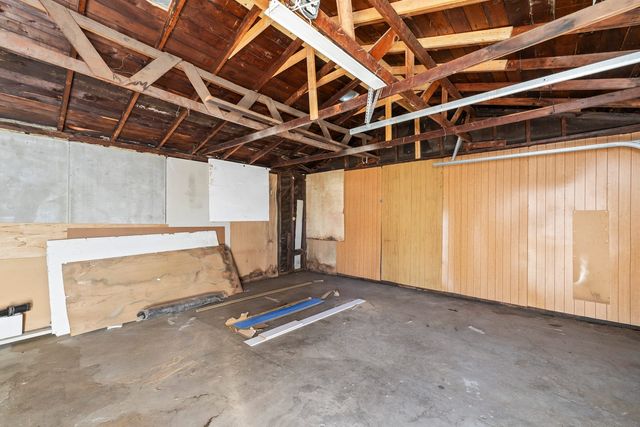
Take a kind of file that comes in: an older single-story house, lived in for decades, with an original kitchen, an aging roof and a garage that was enclosed without a permit.
- The automated estimate picks recent nearby sales of the same recorded size, many of them renovated, and may count the enclosed garage if the record does.
- The agent's CMA picks the sales and listings it expects buyers to compare, and may suggest pre-listing work to compete with the renovated ones.
- The appraiser picks sales that share the house's condition and legal features, and is generally limited in counting unpermitted space as living area, for reasons covered in why appraisers cannot count unpermitted living area.
- The cash buyer picks renovated resale comps and deducts the roof, the kitchen and the garage question as lines.
None of them is lying. They chose comps for different jobs, which is why the guide to which home value you need starts with the job, not the number.
Five questions that test anyone's comps
- Which sales did you use, and why each one? Ask for one line per comp.
- Were they closed, pending or listed? Only closed sales are evidence of a price someone paid.
- What condition was each comp in when it sold, compared with this house?
- Are any from outside this market area, across a county line or in a different kind of tract, and why?
- Which comp carried the most weight in the final number?
Anyone who chose carefully can answer all five on paper. A number that comes without them is a number you cannot check.
When the open market nets more
Comparing comps only matters because it leads to a decision. When the house shows reasonably well, its comps are recent closed sales in similar condition, nothing on it will trip a financed buyer's appraisal, and you have time to prepare and market it, listing usually nets more than a cash sale. A cash offer fits better when the repairs, the timeline or the paperwork would shrink the buyer pool or eat the difference. The only way to see which applies is the net, line by line, on both routes.
That is what the home value page is for: one walkthrough, then an as-is cash offer and an open-market read on the same sheet, each showing its comps, its deductions and its net. The open-market read is a preliminary estimate, not an appraisal. There is no cost and no obligation to get the two numbers and the written report. You can also call (909) 498-3977. Local notes for the county are on the San Bernardino County page.
Sources
- Fannie Mae Selling Guide B4-1.3-08, Comparable Sales: selling-guide.fanniemae.com (accessed November 6, 2026)
- Freddie Mac, UAD and Forms Redesign FAQs (UAD 3.6 mandatory date; retired report forms): sf.freddiemac.com (accessed November 6, 2026)
- California Business and Professions Code section 11302 (definition of appraisal; licensee opinions excluded), copy read on california.public.law, accessed November 6, 2026
- Redfin, How the Redfin Estimate works: redfin.com (accessed November 6, 2026)
Cash offers come from independent buyers and investors who buy for their own account and may resell for profit; a cash offer is generally below what the open market would bring. Any value shown is a preliminary estimate, not an appraisal. Nothing here is legal, tax or financial advice.
Frequently asked questions
How are comps chosen for a home appraisal?
For a loan that may be sold to Fannie Mae, the appraiser reports at least three closed sales with similar physical and legal characteristics, such as site, room count, finished area, style and condition, from the same market area where possible and usually closed within the last 12 months, and must state each one's distance and explain any that fall outside those norms.
Do an online estimate and an appraisal use the same comps?
Often not. An automated estimate is chosen by software matching recorded facts such as size, age and distance, and it never sees the house. An appraiser inspects the house and must choose sales that share its physical and legal features, including condition, and support them in the report.
Why would a cash buyer use renovated houses as comps?
Because a cash buyer usually plans to repair and resell, renovated sales show the value it is aiming for. The offer then deducts repairs, holding and resale costs and the buyer's margin as lines. A written offer should show which comps were used and each deduction, so condition is not counted twice.
Can a comp come from another city or county?
It can, if buyers treat the two areas as one market. Under Fannie Mae's rules an appraiser who goes outside the subject's market area must explain why, and may not stretch the neighborhood boundaries just to include the sales chosen.
Written by
Anthony Grynchal
Anthony Grynchal is a California real estate salesperson with eXp Realty, licensed since November 2009 (CA DRE #01873626), and the owner of Mr. Cali Offers.
More about AnthonyPublished